G
★
← Back to ranking growth.
Full review
Full ranking →
Ranked #9 of 15 Natural prostaglandin source

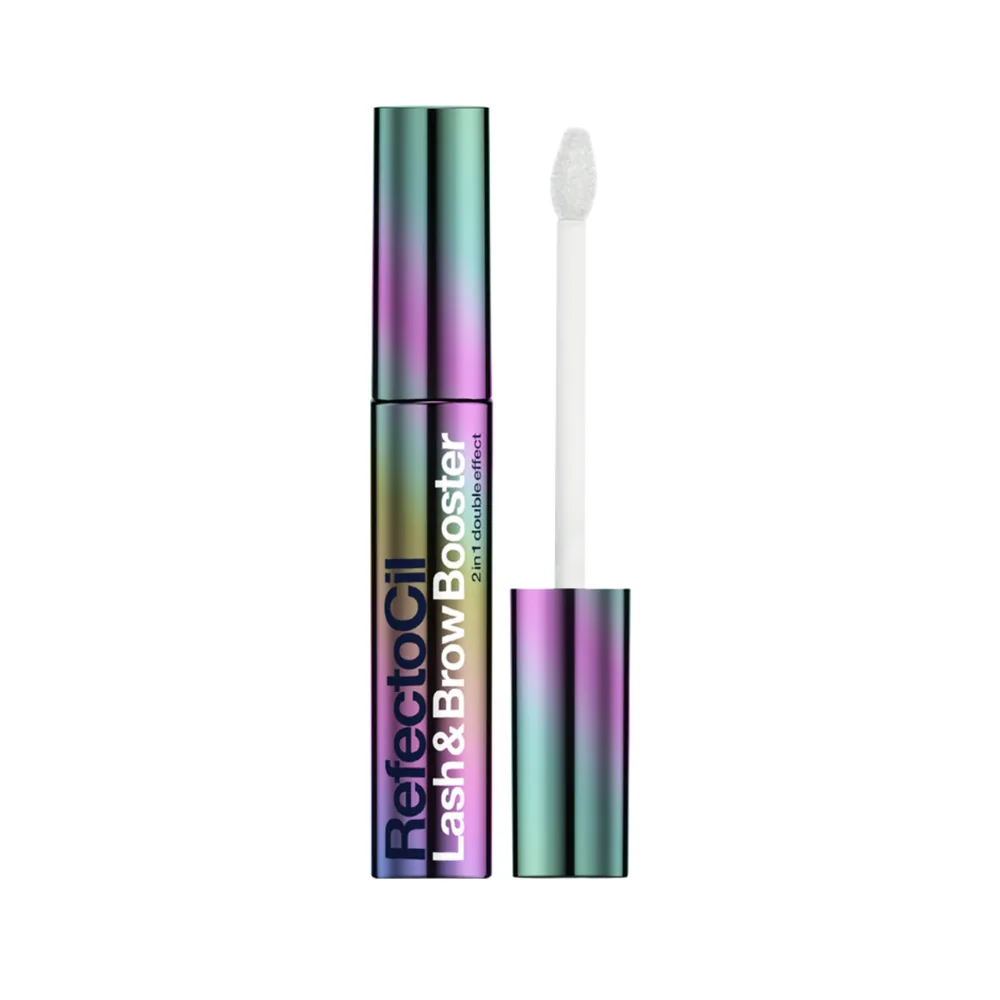
RefectoCil Lash & Brow Booster

A salon staple that works as both a conditioning treatment and a clear mascara base, and the most interesting label in the ranking. RefectoCil contains no synthetic prostaglandin analogue — the brand is right about that. What it does contain is Black Sea Rod Oil, which is one of the richest natural sources of prostaglandin on the planet.

Tested by the Growth Lash Serum panel · 12-week trial · Last reviewed 13 August 2026 · How we test

Price
£20
Size
6 ml
Cost / month
~£7
Type
Conditioner
Compare all 15 → Read the verdict
RefectoCil Lash & Brow Booster bottle
Growth overall score
Active: Black Sea Rod Oil
7.4
/ 10

Score breakdown

Efficacy
6.8

Conditioning rather than growth. Lashes look healthier, not longer.

Safety
7.5

No synthetic analogue — but the active is a natural prostaglandin source.

Ingredients
8.0

Panthenol, biotin, hyaluronate and Black Sea Rod Oil.

Value
9.0

£20 for 6 ml, and it doubles as a mascara base.

The full review

12-week user trial · INCI read line by line

What is in it

Panthenol, biotin, sodium hyaluronate and hydrolysed glycosaminoglycans handle the conditioning. The active is Black Sea Rod Oil, extracted from the Caribbean gorgonian coral Plexaura homomalla — an organism that carries prostaglandin A2 at roughly 3% of its wet weight, around a million times the concentration found in most animals. RefectoCil describes it as a hormone-free alternative to prostaglandin, and it is true that there is no synthetic analogue here. It is not true that there is no prostaglandin. This is a natural prostaglandin source, and it is why the product works.

Full ingredient list

Aqua, Phenoxyethanol, C12-15 Alkyl Benzoate, Caprylyl Glycol, Panthenol, Acrylates/C10-30 Alkyl Acrylate Crosspolymer, Biotin, Sodium Hydroxide, Alcohol, Sodium Hyaluronate, Black Sea Rod Oil, Phenethyl Caffeate, Hydrolyzed Glycosaminoglycans.

How it performed

Better than a pure conditioner and well short of an analogue serum. Lashes looked glossier and broke less by week eight, and a minority of testers showed a small measurable gain in density by week twelve — which is more than panthenol and biotin alone would produce. Nobody reported irritation, and it is safe alongside lash extensions.

Who it is for

Anyone recovering from extensions or stepping down from a synthetic analogue, and anyone who wants a mascara base that earns its place. It is a reasonable middle option. It is not the right choice if your goal was to avoid prostaglandins altogether — for that, The Ordinary or Sweed are the only two serums in this ranking that qualify.

What we liked

✓
No synthetic prostaglandin analogue
✓
Works as a treatment and a mascara base
✓
6 ml at £20 — about £7 a month
✓
Extension-safe

Keep in mind

−
Black Sea Rod Oil is a natural prostaglandin source, which the marketing does not make clear
−
Not the product to choose if avoiding prostaglandins entirely is the goal
The verdict

Ranked #9 of 15

A good product with a marketing claim that needs an asterisk. "Free from prostaglandins" is accurate only if you read it as "free from synthetic prostaglandin analogues" — the active ingredient is a coral extract chosen precisely because it is loaded with natural prostaglandin A2. As a gentler middle option it works well. As a way of avoiding prostaglandins, it does not do what most buyers will assume.

7.4
Growth score

Safety note

This product contains no synthetic prostaglandin analogue, but its active — Black Sea Rod Oil from Plexaura homomalla — is a natural prostaglandin source. The documented eye-area risks (eyelid darkening, orbital fat loss, iris pigmentation) come from studies of synthetic PGF2α analogues such as bimatoprost and latanoprost derivatives, not from this material, and we have seen no reports linking it to those effects. Equally, it has had far less scrutiny. Patch-test for two nights, remove contact lenses before applying, and stop if you notice redness, swelling or any change to your eyelids.

We review products, we are not clinicians, and this is not medical advice. Ingredient information was taken from the manufacturer's published INCI list on 13 August 2026 — formulas change and brands sell variants under similar names, so check the pack you are holding. If this page is out of date, email us and we will correct it.