The full review
Tested over 12 weeks · 28 participants
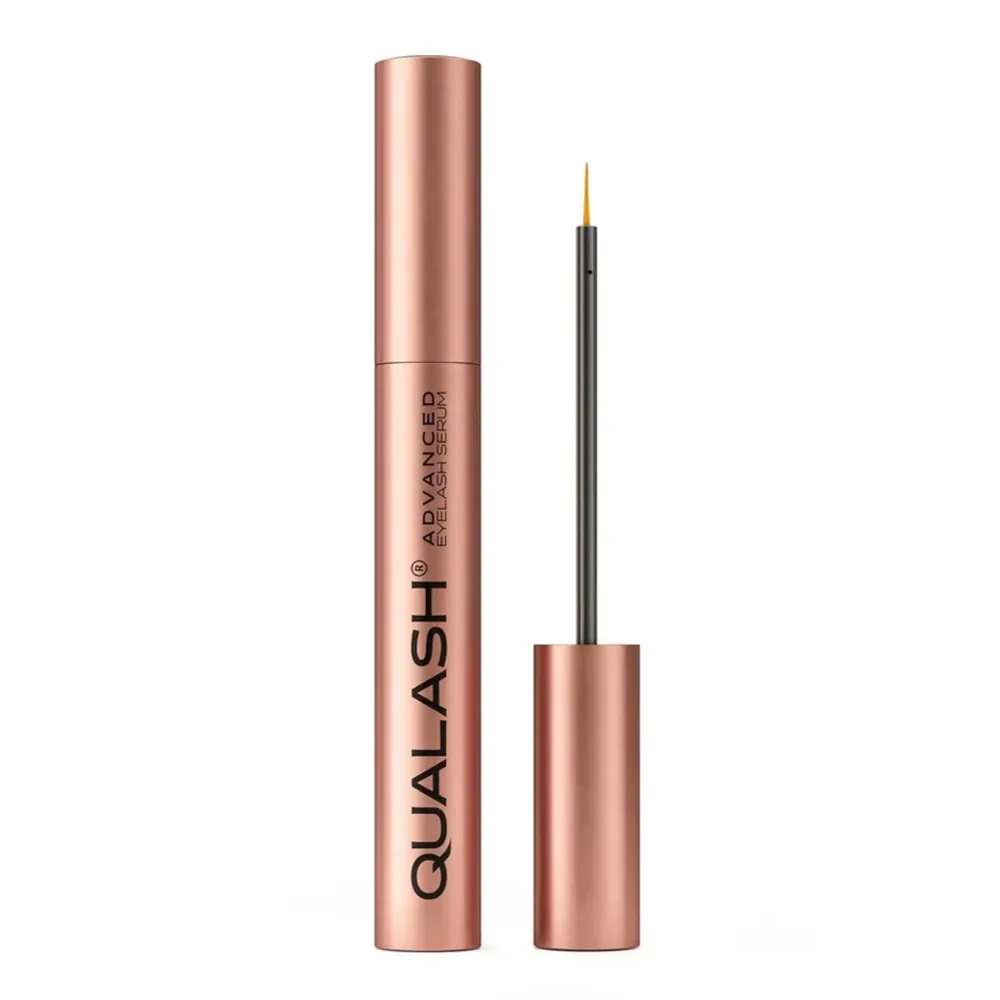
QUALASH produced the clearest results of anything we put in front of our panel this year. It also contains a prostaglandin analogue, and those two facts are not a coincidence. This review exists to explain both halves of that, because the marketing around this product leans hard on its peptide content and rather less on the ingredient doing the heavy lifting.
What is actually in it
The published INCI list is: aqua, myristoyl pentapeptide-17, myristoyl hexapeptide-16, propanediol, arginine, lactic acid, glycine soja germ extract, triticum vulgare germ extract, scutellaria baicalensis root extract, sodium benzoate, gluconolactone, calcium gluconate, sodium chloride, alcohol, phenoxyethanol, ethyl tafluprostamide, citric acid, triethanolamine.
The first two ingredients after water are genuinely good peptides. Myristoyl pentapeptide-17 and myristoyl hexapeptide-16 are the same pair used in several well-regarded lash and brow products, and seeing them that high in the order is unusual — most serums bury their actives after the preservatives. But sixteenth on the list is ethyl tafluprostamide, an amide derivative of tafluprost. Tafluprost is a prostaglandin analogue used as a glaucoma medicine, and lash growth is its well-documented side effect. It is also the same substance the SCCS lists as dechloro dihydroxy difluoro ethylcloprostenolamide — the two names refer to one compound. Whatever else is in the bottle, that is the ingredient producing most of what our testers photographed.
Why that matters
Prostaglandin analogues as a class are associated with darkening of the eyelid skin, loss of fat around the eye socket, and permanent change to iris colour. In February 2026 the EU's Scientific Committee on Consumer Safety concluded that three of them — isopropyl cloprostenate, methylamido-dihydro-noralfaprostal and DDDE — cannot be considered safe in cosmetic lash products. Ethyl tafluprostamide is dechloro dihydroxy difluoro ethylcloprostenolamide. They are two INCI names for the same compound, CAS 1185851-52-8 — which means QUALASH contains one of the three the SCCS named, listed under its less familiar name. That is worth saying plainly, because a label reading "ethyl tafluprostamide" does not look like the ingredient people have been told to avoid, and it is.
There is a second point worth being blunt about. Our trial runs twelve weeks. The effects that concern regulators develop over months and years of continuous use. A clean twelve-week record — and QUALASH had one — tells you the product does not sting. It does not tell you what three years of nightly application does to the fat pad behind your eyelid. That gap is exactly why the safety score here is capped rather than awarded on trial data alone.
How it performed
Fast. Several testers reported visible change at week five, ahead of every peptide-only serum in the ranking, and by week twelve 26 of 28 showed clearer density in the standardised photographs. Just over half showed measurable added length. Nobody reported stinging, redness or visible darkening along the lash line during the trial, and there were no dropouts. On results alone it would top this list.
Why it finishes first — and what that costs it
Our scoring puts results at 50%, safety at 20%, ingredients at 20% and value at 10%. QUALASH takes the highest efficacy score we have awarded and the second-highest value score, and that combination is enough to win even with its safety component capped at 5.8 for the analogue. The cap is not cosmetic — it is the difference between 8.7 and a score in the nines, and it is why The Ordinary Multi-Peptide sits half a point behind on a formula that is slower but carries no analogue at all. Against the other analogue serums it is not close: QUALASH beats UKLASH, RevitaLash Advanced, GrandeLASH-MD, M2 BEAUTÉ, RapidLash and LiLash on results while costing a fraction of what most of them charge.
How to use it, if you use it
One stroke of the fine brush along the upper lash line at night, on clean, dry skin — never the lower lash line, never in the eye. Take contact lenses out first and let it dry. Wipe any excess off the lid rather than leaving it there, because skin contact is where pigmentation changes start. The 3.5 ml tube lasted our testers about three months.
Patch-test for two nights first. Photograph your eyes at the start so you have a baseline, and check your eyelids and iris in daylight every few weeks rather than trusting memory. Cycling off periodically is more sensible than using it indefinitely.
Who should not use it
Anyone with glaucoma or ocular hypertension, or using prescribed eye drops, should not start this without speaking to an optometrist or GP — prostaglandin analogues act on the same pathway as that treatment. The same caution applies if you are pregnant or breastfeeding, or if you have light-coloured irises, where pigmentation change shows most. If any of that describes you, a prostaglandin-free peptide serum from the top of our ranking does a slower version of the same job with none of the conversation.